Radar sensors
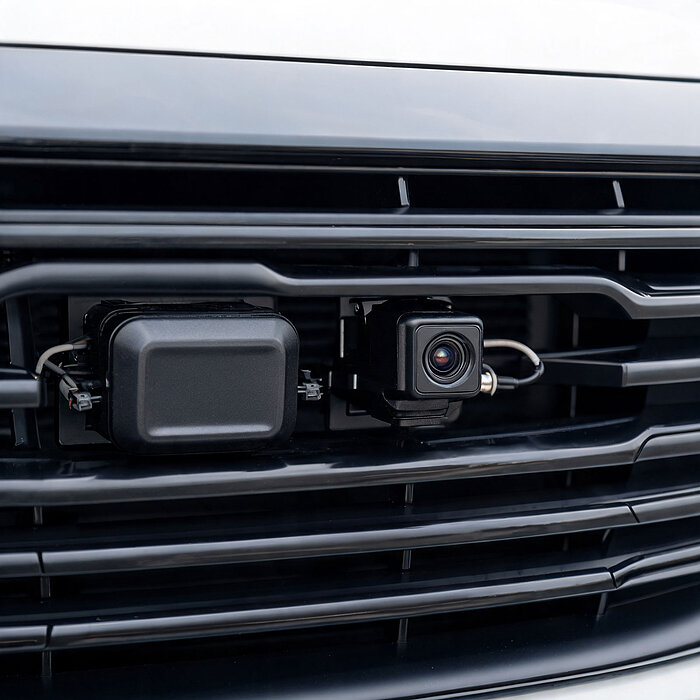
Radar sensors are a key technology in modern advanced driver assistance systems (ADAS) and automated driving. They primarily operate in the 77 to 81 GHz frequency range and reliably detect the distance, speed, and position of vehicles, pedestrians, and other objects, even in rain, fog, or darkness. Typical applications include Adaptive Cruise Control (ACC), emergency braking systems, blind spot monitoring, and cross-traffic detection.
Radar sensors typically consist of a high-precision housing with a radar-transparent front cover (radome) that protects the sensitive electronics from moisture, dirt, and temperature fluctuations. The housings must remain leak-tight and mechanically stable while minimizing interference with radar performance. Precise joining technologies such as ultrasonic welding are therefore well suited for radar sensor production.
Industry: Automotive
Materials: PBT, PC/PBT, PA6, PA66, PPS, LCP, PC, PP, ASA
Joining processes: Ultrasonic welding, riveting of PCBs or shielding and cooling plates, embedding
Benefits: High-precision, fast joining of plastics and membranes
Requirements
- High leak-tightness to protect the electronics
- Precise positioning of functional components
- High dimensional accuracy for reproducible production
- Low thermal impact on sensitive components
- Energy-efficient joining process
- IP67/IP69 sealing performance
- High mechanical strength throughout the product’s service life
- Suitable for competitive high-volume production
- Process validation and full traceability
- Consistent quality across millions of manufactured components
- Compliance with regulatory requirements in the automotive industry
- High resistance to temperature and humidity
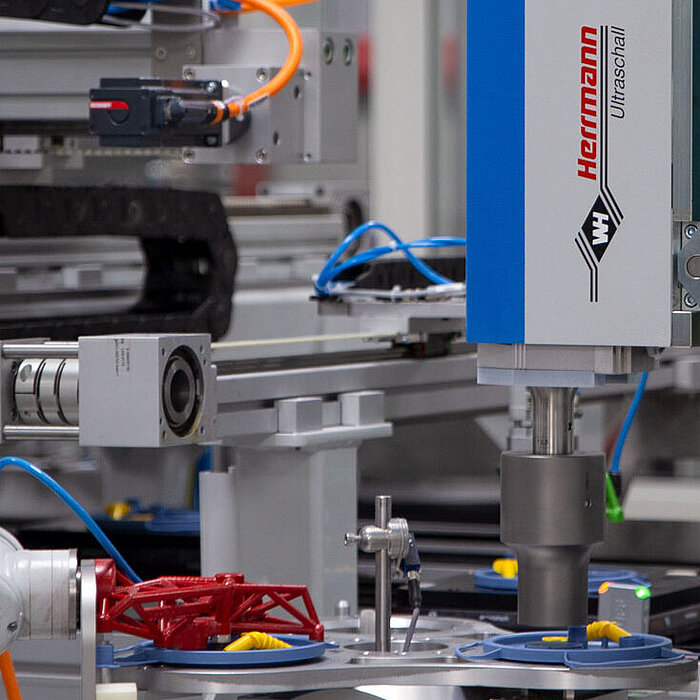
Our solution
Why do many process engineers prefer ultrasonic welding?
This results in:
- clean joints
- reproducible quality
- short cycle times
- automation-ready production
Why use ultrasonic joining technology for radar sensors?
Benefits
- No adhesives or solvents
- Low thermal impact on sensitive components
- High process reliability and reproducibility
- Suitable for automated high-volume production
- Full process monitoring and traceability
Typical materials
- PBT
- PC/PBT
- PA6
- PA66
- PPS
- LCP
- PC
- PP
- ASA
Additional applications
- Electronic control units (ECUs)
- Zone control units
- Sensor housings
- Pump housings
- Actuator housings
- Electronic parking brakes (EPB)
More information & downloads
The right solutions for your application
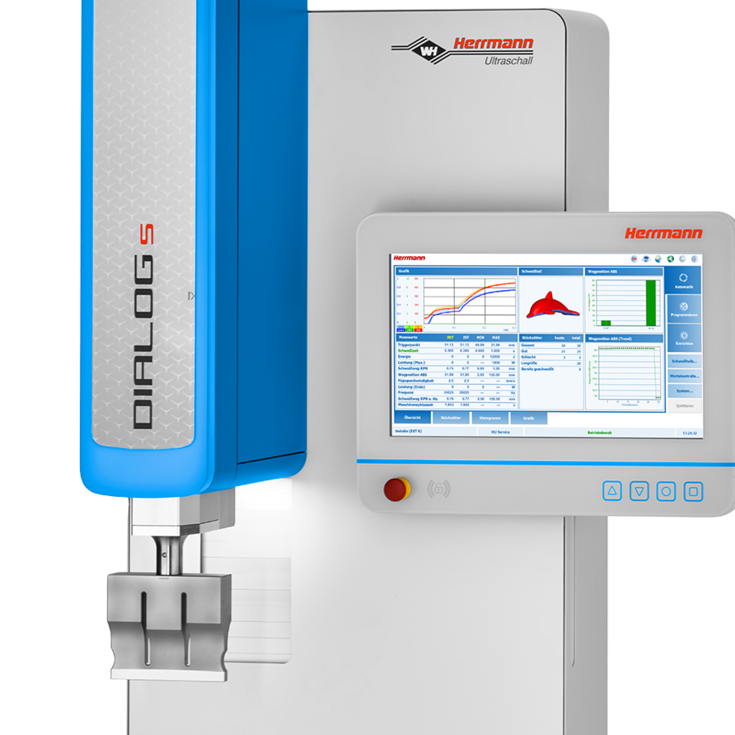
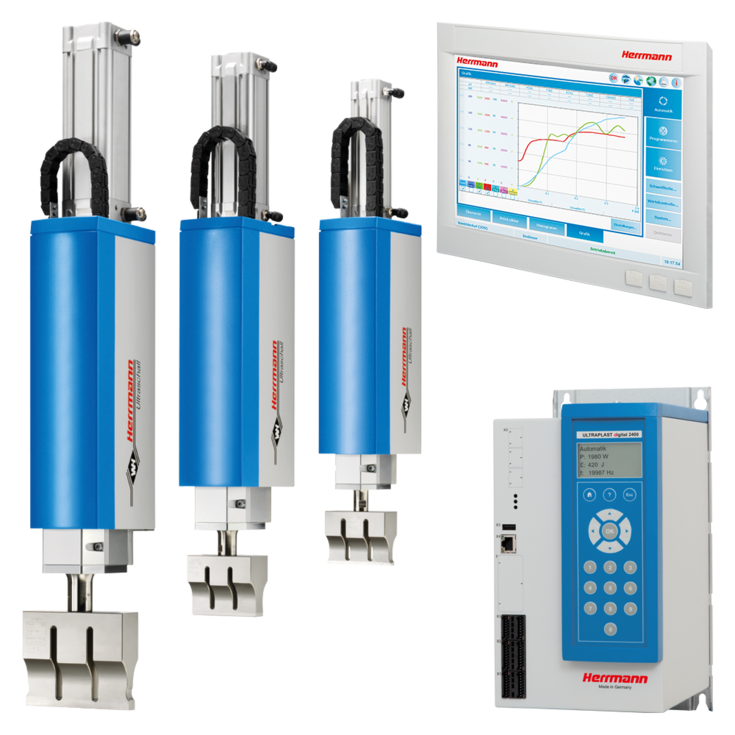
Our consulting services: From product design to integration
Whether you are developing a prototype, planning a production project, or optimizing a process, our experts help you select the right ultrasonic process and work with you to develop the right welding solution for your application.